
Disclosure: Up until about two weeks ago, I washed my 9-year-olds hair on a weekly basis. And made sure he fully bathed himself, soaping up his washcloth for him. Is that a bit over the top?
Probably.
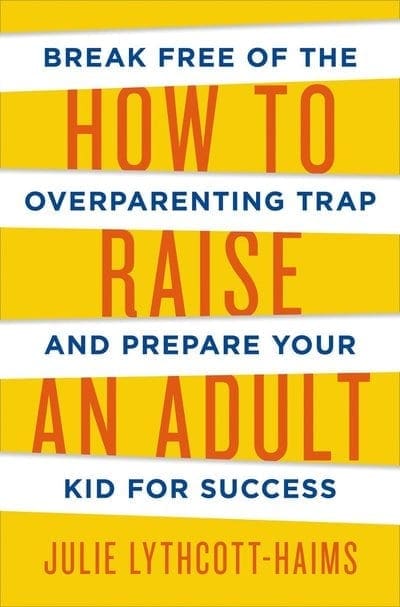
I didn’t bring my laptop on our recent roadtrip. No to-dos, no email, no phone, really, except to take pictures. But I did give myself a fairly big assignment: figure out how to parent better. I brought along a newish book called How to Raise An Adult: Break Free of the Overparenting Trap and Prepare Your Kid for Success by Julie Lynthcott-Haims, which has received some solid Internet buzz.
I don’t consider myself a helicopter parent—which, quite likely, is what every helicopter parent says—but I do realize that I assist my kids with tasks that, at their age, I did for myself. Nothing major (again, probably a chopper-parent claim): just things like said washing of hair, cleaning the bathroom, making school lunches, hanging up wet swimsuits.
Why do I hang up Amelia’s towels instead of asking her to do it herself? A few reasons. Mostly because it’s much easier for me to do it in 3 seconds than turn it into a 13+ minute task that could possibly involve me asking multiple times and her yelling and stomping. It’s the same can-do attitude I bring to my miles. Just get ‘er done.
And I hang them a little because I want to show her unconditional love and support. I know that can’t really be conveyed with wet-towel hanging (especially when she doesn’t even realize I do it). But the love-through-presence-and-labor can be communicated through helping her pick up her room or stepping in when one of her friendships goes awry.
Through her excellent book that uses jaw-dropping examples of how overprotective many parents have come, Lynthcott-Hains proves myriad times that I’m doing all of us a disservice when I confuse love and responsibility, support and accountability. (One of my favorite chapters was Overparenting Stresses Us [the parents] Out Too.)
Unfortunately, chores are the easy part; she illustrates how the wrong perspective can spill over into everything from college admissions to job interviews. (Seriously, parents calling bosses of their 20-something-year-olds to complain about how they are treated at work. So hard to fathom.)
As I devoured the book, there was one section of guidelines that stood out to me.
One part that is easy to remember for all skills, all ages, all situations.
And yes, I’m going to share it. Here she is:
Based on the work of psychologist and author Dr. Madeline Levine, Lynthcott-Haims lays out three guidelines ways we might be, “overparenting….”
1. when we do for our kids what they can already do for themselves;
2. when we do for our kids what they can almost do for themselves;
3. when our parenting behavior is motivated by our own ego.
They’re easy to remember with a little vowel recall (already, almost, ego), right?
I decided, as I was sharing a bed with Ben who hadn’t bathed in 10 days, that things were going to change. I read them this life skill list which Lynthcott-Haims uses as we drove home across the endless state of Wyoming. Some tasks made Ben groan and neither of them happily said they’d comply.
But maybe they saw how gung-ho I was about the whole thing, and they decided not to protest. (Mostly, I”m guessing, because they knew it would just result in more diatribes from me.)
When it comes to already do for themselves, I totally plead guilty. Mostly around food preparation. I prepared two or usually three of their meals daily. Post-Raise-Adult-Read, they are now making their own breakfasts and packing their own lunches for school.
Daily chores: same thing. They pick up their shoes, make their beds, put their dirty clothes down the chute. (But I have to remind them it’s just dirty clothes…the whole “I picked up my room and now every item needs to be washed” game drives me bonkers.) Yes, I remind them to do all their chores, but no, I won’t do it for them anymore. I will nag at regular intervals until it’s done.
When it comes to almost do for themselves, I’m better. I was even pretty good before reading the book because almosts, with kids ages 9 and 12, are usually emotional or relationship-oriented. Skills in these categories are too important to hover. You can learn to use a washing machine at any age, but speaking up when you’re having trouble—and other important life lessons—need to be learned when you’re young and the stakes are relatively low. When a math class was causing daily tears or a coach’s words rubbed the wrong way, I delivered the child to the situation, and then waited and waited until they finally mumbled something. (Mostly. I do my best to stay out, but have prompted with questions or lead-ins if the silence is becoming excruciating. Or my patience is fizzing away.)
I am hand’s off with homework unless I am called for assistance. And usually, when I’m asked for help, it’s with my more sensitive kid that dissolves into tears at seemingly minor things like a science project theme. She isn’t wired to already—or almost—cope, and that’s going to be a fragile issue to us both dance around as life gets more intense.
Saving the best for last: the ego. Nothing motivated my own ego. Ugh. That ego is such a bitch. I don’t know about you, but my neighborhood is filled with kids “playing up” in sports and book clubs the elementary school set. (Really? I thought book clubs were for gossiping and drinking wine.) It’s so easy to get caught up in the atmosphere of crazy expectations and constant motion and feeling like what your kids do is a direct reflection on both you as a person and a parent. (And yes, I fully admit I contribute; a day without an after-school activity feels empty to me.)
When I start to get all fired up about Ben on the basketball court or dreamy about Amelia’s backstroke, I remind myself that they’re the ones playing. And living in their bodies. They’re the ones deciding what they get to do with their lives. Same with academics. I can’t find the page, but Lynthcott-Haims recalls a conversation between guidance counselors where one said something like, “You know that kid would be much happier and better off going to the University of Arizona, but her parents are fixated on Yale.”
Please note: on August 28, 2015, I, Dimity McDowell, am typing that I am totally fine with my child being a Wildcat, not a Bulldog. (I may need to be reminded of that periodically. And nothing, of course, against the U of A. Just a comparison thing.)
So complicated. Unlike running, there’s nothing crisp about parenting—and there’s no easy way to finish this rambling post. (Are you still with me?)
More than anything, raising an adult means I’m here to witness their childhood and help them develop life skills, both emotional and practical. I need to let them suffer, fold their own clothes, figure stuff out, brush their teeth unprompted, make sure they know how to rinse and repeat, find and follow their own bliss.
And always kiss them goodnight. Then let them set their own alarms so they can get up and do it all over again.
If you feel like sharing, where are you on the already/almost/ego parenting scale?




Sounds like a great book and that you got a lot out of it!
This made me LOL. Just last week, my 18 year old told me I could stop making his breakfast for him. I was kind of hurt! But as far as the ego goes, I’m pretty good about letting my boys do their thing. My oldest never wanted to do sports, and even though “everyone” told me to make him play, I let him sit out. He’s given us a run for our money, and no, he’s not going away to college after he graduates high school this year. I’m hoping he’ll at least go to community college. It’s hard to let go of control, but they have to figure it out themselves.
Dimity, this is so well timed. Last night my husband made a list of things that our two girls (ages almost 8 and 10) ARE going to start doing themselves – pick up towels, put toothbrush away, empty dishwasher and more. I protested for a split second saying “they’re just little girls” until I realized this list was coming from him watching me run around the house constantly picking up after them. It’s ok for them to help out and learn to be responsible. This post was EXACTLY what I needed today. Thanks!
Loved reading this article, Dimity. Thank you. I will definitely get this book today. It’s really hard to stay grounded in the parenting world that we live in. One of my kids loves to be independent at 5 years old, and my other kid would still be in utero at 3 years old if he could! LOL! I am definitely guilty of doing things for both of them because it is easier and faster, but we are all working on it. I just started giving my 5-year-old coins when he does his chores. Then he saves them up for toys that he wants. Trying to teach patience is testing my patience!
Dimity, I am right with you. I have this book on my nightstand. It is my next read! My kids are 8 and almost 13. The letting go and letting your kids do tasks that you know they can do is so, so hard. My goal is to turn my kids into independent, productive adults but clearly this will be hard to accomplish if I still make the 12yo’s lunch for her. My 8yo is much more self sufficient. She needed new shoelaces last week because hers had frayed at camp. We purchased them at the grocery store that night and when I came downstairs the next morning, she had replaced them all by herself. I was amazed. This was such a pivotal moment for me. I am teaching them to do laundry. A big impetus for this was the laundry unit that the 7th grader had this year in her home and careers class. She can do it herself but it takes forever! The most frustrating thing about getting them to do anything (clean their rooms, do laundry, set the table, put away the dishes, etc.) is the nagging, cajoling and pleading to finish. It makes me crazy because I hate listening to myself sound like a nag but I know that they need to learn how to do things for themselves. I still make breakfast for them too and starting today, that will stop. So glad to know I am not the only one. I was such an independent child simply because I was alone so much and I was forced to do for myself. (Typical latch key kid from the 70’s!) I think I do these things for them to let them know that they are not alone and that I love them. But teaching them to become productive, independent functioning people is another form of love too! Thanks for a great post!
Another perfectly timed post, Dimity. As a mostly single mother of four kids, 13, 8, 4, and 4 I have had to let my kids do more for themselves this past year. I have let my 13yo do her own laundry because I know it will take forever or she will be wasteful and wash one thing at a time. I too, get tired of nagging and listening to myself. So much easier to just do it myself, the way I expect it done. I try to remind myself that I am raising kids to be adults and no one wants to live with someone that can’t do things for themselves. It also gives kids a sense of pride and independence knowing they don’t need me to do things for them.
This is one of the areaswhere having a lot of kids-and having them close together in age-had been a huge blessing for our family. There is no way I could do it all for everyone. Well, there is, and there have been days I have tried, but it drives me into the ground. Now that I have a handful of older kids in addition to a gaggle of young ones, the kids are really starting to see it as a blessing too. Each time one of my kids finds out that a friend doesn’t know how to cook (or recently, teens/preteens who don’t know how to make a sandwich, really??), they are dumbfounded. It has been incredibly rewarding to get thank you for teaching them these things early in life. Plus the look of pride on my 6yr old’s face when she tells people she cooks pancakes and eggs for breakfast is awesome!
I have had a number of well meaning people, from friends to family members, and even complete strangers in some situations, tell me I expect my kids to do too much, and even that I shouldn’t have had children if I wasn’t going to do everything for them. I’ll admit that it hurts and has made me second guess myself over the years. But when I got a call from the boss of my oldest daughter (16), who just had to tell me how blown away she was to have hired a teen who didn’t need to be handheld through each step of the job for months, I had a little moment of payoff. I hope that scenario continues through the rest of my kids as they grow older and head out into the world, and that I don’t go backward as the older ones head out. My fear is that I’ll get sucked into doing more as I end up with fewer kids still in the nest, or that I will take back over and do more when I get down to the end of my line, trying to hold on to my “baby” or something.
Hey Catey–I thought of you while writing this blog post. When you took over our IG account, you posted a pic of your 2 year old making a PB sandwich on the floor. That image has stuck with me…thanks for that.
This indeed was a timely post! I have always had a tough time with some of these things as my boys are now 14 and almost 12. Some stuff I’m better at than others. It’s always being pointed out to me by my husband, I know it’s true, and I know I need to let them grow up! I can’t stop time:)
I can’t wait to get my hands on this book!
Thanks, Dimity, for sharing
Great (and honest) review Dimity! It’s so easy to think I’m not one of the “those parents,” much like an alcoholic would find someone who abuses more than himself to justify he isn’t “that bad.” Gulp. I make my girls breakfast (and pack lunches, and do dishes, and laundry….) and justify it with a number of useless-for-them excuses (but I am not a fan of the smoothie berry stains on the counter and the sink, but wait, is that another excuse?”) As a single mother it’s hard to know when to stop doing some of these things because 1) you get into a routine of child care (like hair washing, except we called it “car wash” time) and 2) it’s easier and takes less time than training wild monkeys (okay, I’ve never trained wild monkeys but I imagine it’s easier and monkeys don’t talk back or talk about how mean you are), and 3) and maybe most important is no other adult is in the house holding you accountable for over mothering. I remember helping my daughter on a one of those dreaded school poster board projects once and a friend was over and asked, “How is ELLIE’S school project going?” and it was a gentle way of reminding me it wasn’t MY project. Remember the pediatrician visits when they were younger and we as moms were so eager to reach the hurdles of what they should be doing by each age? When did that stop? Maybe we need that all through age 18, when they can stay home alone at night, bike to stores by themselves, make breakfast and lunches, learn laundry, etc. Dimity maybe you can write that book next :-)
Love this….while I haven’t read this book, it reminds me of another book called “The Blessings of a Skinned Knee”….. I definitely do not over help my kids when it comes to homework….I tell them if you don’t know how to do it, either you didn’t pay attention in class or the teacher did not explain it well, and you need to figure out which one and solve the problem. If they leave a project at home, I don’t run back and take it to them. Let them get a lower grade and learn their lessons now. But I am terrible with other responsibilities at home like say make your own lunch or clean your room…. They do get their own breakfast, but I need to work on the rest! Thank you for the reminder.
My son is 6 and when I had him I was a single parent up until he was 2 and a 1/2 . I taught him at an early age to be independent. At 2 he had a big bed and he would get ready for school ( daycare ) by getting dressed every day himself. He would get himself ready every morning so I had time to get ready myself and only have to help him brush his teeth and get his breakfast for him. Now that he is 6, he gets up at 6am by himself everyday gets ready for school or camp and waits until one of us calls him down to eat. The night before I have him make his own lunch and he does his own chores of emptying trash and pulling all the laundry to the washing machine, he puts his own laundry away in his dressers and puts them in the hamper and not the floor when they are dirty, he picks up his toys when he’s done or when asked without hesitation or argument and asks first before watching tv or playing video games as he has a time limit on electronics .
I am anything but a helicopter parent probably because the first 2 years of his life I was a single mom so he needed to learn to do things on his own before I met my boyfriend but I am constantly told I shouldn’t allow my son to be independent that he needs time to be a kid but all I can say is my child is a helper and always offers to help me with chores and stuff around the house , my son is anything but lazy and has proper with manners. I believe since we have had the same schedule since he was born and have a set schedule for him he has become independent and learned to help others. As he gets older he will have more chores added to him. Currently I have him help unload the dishwasher and do dishes and clean the bathroom with help. I just hope that the way I parent wont affect him later in life but I believe I am allowing him to grow up mature, responsible and helpful to others.
Great post! And this topic has been at the heart of so many conversations I’ve had with friends lately. So much to say about how we parent these days and what it does to the kiddos, for better and worse, and what it does to us. My 16 old yr old just had to deal with some conflict at work over who covered his shifts while we were on vacation. He was tempted to fire off a pissy text but then asked me for advice first. I started to dictate a response that I thought would be good, but he tuned me out and kept texting away. He was going to deal with this on his own. As he should. He ended up sending a totally appropriate and well worded response. It’s so hard to step back sometimes….I could ramble on forever….. And did I say I really liked this post? Love it.
Thank you so much for posting this! I also have 9 and 12 year olds who do fairly well on their own. Maybe this comes from me be a farm kid which brings a certain amount of forced responsibility and independence and thus making the decision that my children were not going to go to college helpless (like some people I have witnessed…ahem…my husband). That said, it is definitely the emotional part that I have trouble stepping away from. Trying to help with the 9-year-old’s low frustration tolerance. Getting the 12-year-old to understand that she can’t control other people’s actions, even when they are her “friends” and are making poor choices and being mean. I tend to overtalk things and I think I just need to shut-up sometimes. I am definitely getting this book because I know that I can do better! If it gives tips on how to get them to do the things that I know they can actually do, that would be fabulous!
I’ve taken a different approach: I refuse to read parenting books anymore. They’re all based in the notion that I’m doing it wrong or not well enough in some fashion, and I’m just d.o.n.e. with that. Yep, I make my 10-year-old’s snack and lunch–along with that of my 5-year-old (a new kindergartener!). I’m sure she could make it but it would require multiple reminders and my answer to that is no. It’s not ego; it’s efficiency and my sanity. My sanity says it’s way easier for me to make what are essentially two identical lunches and snacks at the same time. (What I do want: my kids–and my HUSBAND–to work harder at putting stuff back where they found it. Their current organizational strategy can best be described as “shove it someplace” and it drives me up the wall. Now that both kids are in school, there’s going to be some major decluttering and reorganization!)
I’ve decided these books are all a new form of advertising, at some level. They all try to make mothers/parents feel inadequate in some form, and our response is to read them (and the authors hope, purchase them in order to read them) in hopes that we’ll feel less so. But just like fashion, hair products, makeup, etc, we’ll never live up to that beauty/fashion/parenting ideal because it doesn’t exist. My baseline is something else: are my kids happy and reasonably healthy and thriving in school and outside of it? Am I happy with the way the household is running? If so, great. If not, I’ll identify what I don’t like (this morning it was the fact that every single children’s sock in the laundry was turned inside out. What is that??? This afternoon will be a friendly request for the children to put their socks into the laundry right-side out from now on). But that’s where the introspection stops. I don’t care if another parent (and author) thinks I’m doing it wrong. Someone always will. Are my kids happy and healthy? Yes. Are they doing well at school at home? Yes. So we’re good.
If the books help, then by all means, go and read them. But if everything is going well, don’t read the books. My only regret is that I didn’t stop reading them sooner. At this point, I’m quite convinced that half of the examples they use are either exaggerated, fictional, or blown out of proportion. The kids are alright, and my parenting skills are too.
Thanks for your important perspective, Lisa. Absolutley understand where you’re coming from–and for what it’s worth, I’m not a huge fan of the parenting genre. I agree that they can make you feel worse than Facebook on a bad day. I picked this up for a number of reasons, including some articles with the author that linked overparenting to depression in kids, which is intriguing to me. But I agree: if your boat is sailing well, no reason to worry about it sinking. Hope Kindergarten has started well!
I grew up with a non-English speaking single parent so I learned how to do things on my own very quickly from a young age. Yes, that was me translating for my mom at Parent Teacher conferences, and filling out all the school forms for her to sign, back in the day. Fast forward to now, and I recognize that I have shielded my kids a little too well because I didn’t want them to “struggle” like I did. I think we all want that for our kids and it’s done with good intentions. But now that they have hit their teens, I’m going to be asking them to do more, not for me, but for themselves. I don’t want them to not know how to follow a recipe and cook a meal. I don’t want them to not know how to call and make an appointment. I don’t want them to not know how to wash their laundry or iron. I foresee some tears and arguments ahead but I think it will be worth it.
What? The U of A isn’t as good as Yale? No cold winters here and not Ivy League priced tuition!! ;0)
I only had to give you a hard time about it because we are a Wildcat family – my mom and sister graduated from the U of A (I will in the spring), and both my kids are attending the U of A and I work there as well.
Thanks for the book recommendation!
Hey Amy: U of A sounds pretty good to me! Love the family tradition. Congrats on the near graduation!
I have older kids (one will be 17 this week; the other is 13) so I am seeing my former helicopter tendencies come home to roost now. As an aside – when they get to be upper teens it becomes clear just what kind of parent you have been! Anyway, my oldest is a mix of helpless and very independent. He has traveled alone several times, has loads of freedom to roam around town, manages his own bank account, and has been managing his own homework for years now (mostly because it is way out of my league). However, he loves to cut a deadline close to the last minute, is completely indifferent to messes, and is so passive sometimes as to be vegetative. So I am, and have been, very hands off in some ways; in others, I still have to give multiple reminders. He was completing his application to the National Honor Society last week, and it had to be printed, signed, scanned, and emailed before a midnight deadline. I had to nag him repeatedly to get him to finish because I had to do the printing, signing, and scanning at my office and I didn’t want to be doing it at 11 pm. Could I, or should I have let the deadline go to teach him a lesson? Maybe.
I have been MUCH more forceful with my younger son in terms of making him do for himself, and in many ways, he’s better about it than my older son, but with him, my husband and I have a bit of a dysfunctional dynamic. This son is a total daddy’s boy, and my husband babies him way more than I do. I will refuse to give him a ride to school if it is sprinkling (it’s a ten minute walk) but my husband will cave and do it. I tell him to empty the dishwasher, and no, I’m not going to help, but if he asks my husband, he will help. I tell them both “I’m raising adults, not children” but I think my husband sees it as being kind and nurturing, not enabling. He grew up with no father, so I think there is some element of wanting to do things for our son that no one ever did for him.
Finally, I somewhat relate to one of the comments above about refusing to read parenting books anymore. I think it’s good to be aware that something might be an issue, but books (or friends and their opinions) can really make you second guess yourself. I have quit talking about my kids and how I parent with fellow moms. Someone can ALWAYS make you feel like you are doing it wrong, or like you have to justify what you are doing. I’ve learned that it really doesn’t matter what anyone else thinks of my parenting. As long as my kids seem to be moving along the path of becoming functioning adults — and for the most part, they both are — it’s all good.
Daughter did undergrad work at U of A. It’s an ok school- I too graduate classes there. Not stellar though-but depends on your major. I had my kid doing her own laundry at 10, let her room “go” until she decided it was so messy she couldn’t find anything anymore, and actually had her move to her dad’s house after she graduated from high school as she wasn’t following my house rules and decided she didn’t want to work while she went to school. I only helped with projects while she was in school minimally (HER projects , HER grade, right?) and didn’t fall into the trap of being envious that the other girls got the lead parts in all the ballet performances even tho my kid was a better dancer, but I was unable to donate as much as the dentist (whose daughters got the lead roles of course). It all comes out in the wash-my “kid” is 28, has her Master’s degree and moved to Chicago to achieve it. She did it all on her own-as well as setting up her move back to Az. to get her first “big girl” career going. I will help her set up her apt. if she wants me there…guess I did something right, but really never thought about what I did. Just did what I thought was right at the time.
oh and if (probably when) they come home drunk, throwing up in your bathroom, turn on the light, tell them they look like hell, and smell and then tell them you are glad they are home safely and that you love them…
Hi Dimity! (it’s me :-) Love this post! A great reminder and inspiration to keep at it, making them do things for themselves. I am still making all the meals, and it’s partly a control thing (I’m also making them finish milk and fruit/veges), but I’m inspired to start having them prepare meals more, maybe even making breakfast for all of us on the weekends (though it will take them half the morning if we include cleanup). I’m worst with my youngest (5), as alluded to in another post: I sometimes do a reality check remembering when the other kids were her age we had a baby around, so they were expected to be the responsible ones. We all (the other kids too) still take care of her too much (which has been partly rationalized on my part because it’s good for the older ones to be helping a younger one).
Hi Nell! Great to hear from you. :) Honestly, we were falling through frozen ponds and making potions in the kitchen at the age our older kids are now…but yes, I hear you on the control thing. Tough to give up!
Hi Dimity. I LOVED this post and will purchase this book today. Maybe this can be our next running book club read. So tonight we will find alarm clocks for our 9 and 12 year olds and start working on having them pack their lunch. The ego thing will be the toughest…. Good thing I am training for a marathon so I can pound out my ego issues on the asphalt.
Perfect perspective, Teresa. Hope you enjoy it!
This is such a beautifully open and vulnerable post. Thanks for sharing. I’m the mama to two little guys: a three year old and an almost one year old. My tiny dude turns one tomorrow! I can’t even…but it’s interesting to read this from my point in this parent game. My littles are SO little and require help to do almost everything. But just as I’m thinking about it, I see ways in which we can challenge our three year old to do more for himself. Luckily, we’re still in a stage where he loves to do “big boy things.” I suppose we’d better step it up and give him more such tasks now while he still enjoys it!
It goes so fast, Emily…enjoy and congrats on making it to age 1 for 2 boys…an impressive feat!
What a wonderful book review and post! Thank you so much for being so open and honest. Me? as much as I tell myself I don’t give a crap what our friends’ kids are doing and/or how they are doing it, I must admit that I get very caught up in the ego push/pull. I need to constantly question myself if I am having my daughter do too much or do too little. I thought I would be so ‘easy breezy’ about this stuff before I was a parent; now, I find myself thinking ” I didn’t know it would be this hard”. The truth is: it doesn’t have to be. I need to change. Thanks for the book suggestion!!
Thanks Patti. Sounds like you’re already pretty aware of stuff…you don’t need to change. But being self-aware is definitely smart! Thanks for reading!
This post came at the perfect time! I am constantly thinking “At their age I was doing so and so…” as I’m doing everything for them. And I love the idea of never packing a school lunch again, what an (obvious in retrospect) concept! You have such a great perspective on your parenting, your family, and your running. Thank you for this!
I think it is interesting how different kids are in their reaction to responsibility and independence. My older kid has always been much more open to doing things on her own than the younger. Different personalities; different sense of self. The other angle I find necessary to think about is what work actually does need to be done? There is a point at which household tidiness and cleanliness has more to do with my ego and inherited gender self-consciousness than with any objective value. If the only real reason something needs to be done is because someone will think I’m a bad wife / mother / woman, well, then I’m not making even myself do it. That all said, I am getting better at requiring the kids and the husband do their share of the work that contribute to our quality of life.
I need to get this book. I do way too much for my 12 and 14 year old. My husband keeps telling me to have them do more chores/tasks but I have not started. Today is a new day!
Thanks for this post – it’s a good reminder for me and I’m definitely going to pick up this book. My daughters are just about to turn 4 and I think we all might be a bit happier if I take the time to let them do the “already” and “almost”. I’d like to think there are less examples of “ego” since I can barely keep up with the basics (are they fed? did they poop? did they brush their teeth? when did they take a bath?). It’s definitely a meaty topic to think through on my next run. :)
Thank you so much for sharing this book and your thoughts. It’s so timely as I deal with back to school with an 11 and 9 year old. I am so similar to yourself in that I will much more quickly do things for my kids than deal with the conflict that ensues in getting them to do things for themselves. But I’ve also been recognizing lately that I’m doing them a disservice. My 11 year old has an independent streak and seems to be getting to the right place despite my best efforts at sabotaging it. My 9 year old, on the other hand, has a super short fuse and flips out the second there’s something unexpected or contrary. It’s a difficult dance to balance getting him through it vs. teaching him how to tackle problems productively.
Oh, and the exception for my 11 year old is her school work. She will happily blow things off or do the bare minimum of what is required. She rubs the overachiever in me the wrong way, to the point that I’ll read the book she has to read, to make sure she really paid attention. Or I’ll check her home work (not doing so last year resulted in her getting a C- in math despite having A’s on all of her tests — she failed every single homework assignment!). A difficult balance indeed.
This was a great post and gave me a lot of food for thought. I have an almost 5 year old who is heading off to kindergarten. He is my only and I know I do too much for him and baby him a bit. I know I need to let him be more independent and do more for himself. We actually struggle with this sometime because “mama, I’m a big boy and I can do it” is often heard. This gives me the push to give him more to do so he can become a good husband/father/man in he future. Thanks for sharing
This is so incredibly timely for me. 5th grade, and all the responsibility that comes with it, has been a huge culture shock for my 10-year-old. Namely being responsible for writing down his daily assignments and making sure they’re completed. It’s been a rocky first few weeks and I’ve wanted so badly to do whatever I can to bail him out. I’m learning that letting him fail, while necessary, is really freaking hard. Thanks for sharing this, Dimity.
Thanks for the great book review and recommendation. I am new to “serious” running (by serious, I mean, committed, the 10k is on the calendar and I’m registered) and just received your book (Run Like a Mother) last week from a dear friend.
As a mama of 4 sons (16, 17, 19, 21), I put up with a lot of half-done chores, smelly rooms and “what? you forgot your lunch? Oh! Bummer. You’ll be hungry for dinner.” but I can say that they are definitely growing up to be MEN. My hubby and I are a good balance between hands-off and helicopter style. I’m going to get the book cuz there is always something new to learn.
Thank you for writing. I love your witty style and encouragement. I actually call myself a runner now. =)