

This post is by Tiffany Smith, a triathlete, mom of two, and HR manager who lives in Overland Park, Kansas. Tiffany attended our retreat last fall, and a March episode of the Another Mother Runner podcast really spoke to her.
Heavy legs. Walk breaks. Slight inclines feel like steep hills. No flow. No joy. Always a slog, always frustrating. None of this new to me, as someone who isn’t a natural-born runner. But feeling like this all the time? EVERY run? Something’s not right.
Sad runs are the first of what becomes a barrage of symptoms: fatigue, brain fog, weight creep, and low libido, but no correlating lifestyle changes. At my annual physical, I ask about early perimenopause. Nope, too young for that. My lab work shows super-low B12 levels and low ferritin–time for supplements!

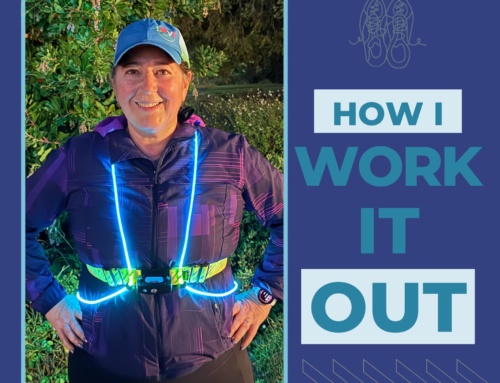
Tiffany smiling at the AMR Hilton Head retreat
Despite supplementing, my energy stays low, weight creeps on along with more new symptoms: bloating, gas, and an unpredictable colon that fails me once when trapped in the coffee shop drive-thru line, ugh. (Thankfully you’re reading this on TMI Tuesday.)
Around this time, I start training for my 3rd 70.3 triathlon—and add regular headaches and bouts of nausea to the rotation, and finally, a stress reaction in my tibia. I feel like I can’t show up for myself the way I want to in training, and I’m also definitely not showing up as well as my family needs me to, feeling exhausted emotionally and physically all.the.dang.time.
It’s like a game of Whac-a-Mole with symptoms and tests: My doctor and I go down every rabbit hole, testing for ovarian and colon cancer, celiac disease, sleep disorders, SIBO (small intestine bacterial overgrowth), and more. Each clear test is a relief and a disappointment—relieved not to be “sick,” yet disappointed not to have answers.
The true a-ha moment comes as I listen to the episode of the Another Mother Runner podcast featuring sports dietitian Becca McConville. In discussing Fueling + Energy Balance, her words hit me like a ton of bricks: We see this subtle mismatch, it doesn’t have to be extreme… it just takes 250-400 calorie discrepancy between what you’re taking in and what’s being expended to slowly start seeing dysfunction.
LEA—Low Energy Availability. I feel like the head-exploding emoji: I’d heard of LEA before, but never considered it because 1) I’m not a tiny person; 2) I never lost my period; and 3) I like cookies and follow a general “everything in moderation” approach to nutrition. As I research more, I recognize almost every single LEA symptom.
So what now? I’m still figuring that out. My mantra is that knowledge is power. Knowing that I need to honor my hunger and not try to ignore it because “I just ate.” Knowing that I need to go ahead and have that 2nd energy gel during my 90-minute bike ride. Knowing that my body needs energy (read: food!) not only to show up for myself and my training, but also for my family and our life together. In talking with some of my mother-runner friends, it seems like LEA is so widespread.

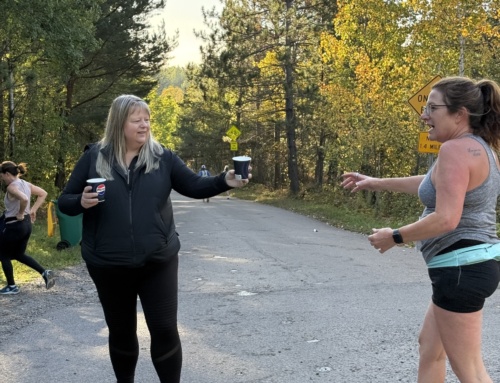
TIffany feeling better at a recent 10K
I’ve learned how to better fuel my workouts and my recovery. I did a 10K a few weeks ago, and downed both gels that I had packed. Afterward, I went out to brunch with friends and didn’t pretend like that was going to take care of my lunch, too: Brunch was recovery and refueling, and a couple of hours later, lunch was just lunch. Those conscious, intentional decisions kept me ahead of the curve through the remainder of a busy weekend full of chores, errands, kiddo-shuttling, and I was even ready to tackle a 4-miler the next morning.
It’s gratifying to see improvements: I’m not suddenly the Energizer Bunny, yet neither am I completely wiped and in bed at 7:30 every evening. Slow and steady—like my running—is the pace of improvement, and that’s fine by me.


Leave A Comment
You must be logged in to post a comment.